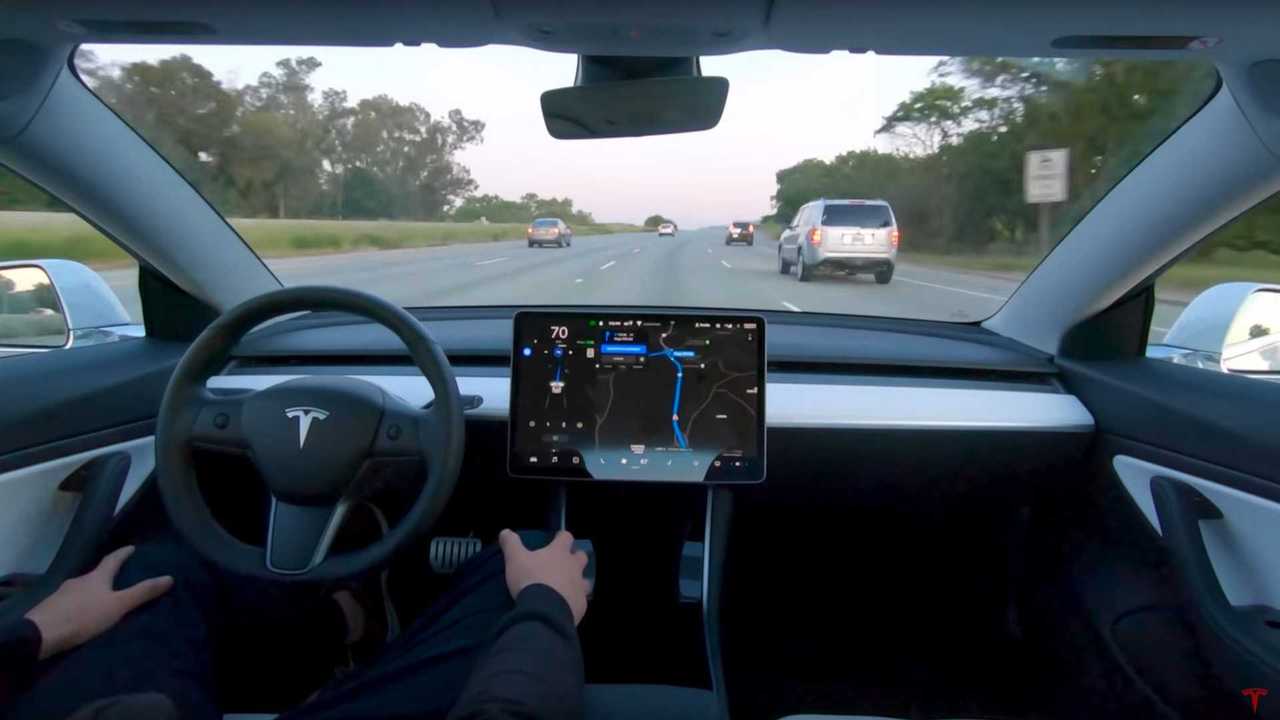
I have an informal wager running with a handful of people on the following question:
What year will cars that are autonomous-capable constitute over 50% of the cars sold in that model year?
I began this wager in 2015, and I said “within 7 years”. Giving myself credit for the fact that 2016 model year cars start being sold in late 2015, I’m going to clarify my prediction to say that the 2023 model year is my target prediction.
I acknowledge this is optimistic. Here’s a list of the beliefs that drive my prediction (which I may update from time to time on this blog post):
- Technology will advance faster than mainstream pundits give credit.
- Insurance factors will drive rapid adoption. Accident losses will be lower on self-driving cars, and to maximize profit, auto insurors will offer insurance at lower cost to cover self-driving cars, quickly growing demand.
- Fleet-economics driven by Uber, Lyft & others will incentivize & accelerate needed manufacturer engineering.
- Multiple teams will be attacking the machine intelligence software needed, so manufacturers will have the choice of using licensed tech, or inventing in-house (if able). The rate of change in machine intelligence has increased dramatically in the last several years compared to the decades prior. The sensor technology is already available off-the-shelf, cheaply, and will be rolled into cars WELL before the software is fully able to use them.
There’s one factor relating to this second assumption that I failed to recognize: Self-driving cars might dramatically shrink the auto insurance industry. If loss-rates are in fact much lower for self-driving cars, and if fleet accident rates are low-enough to encourage self-insuring (for collision loss), this could actually dramatically drive down overall auto insurance revenue. I had not considered this until reading this article at the Boston Globe on the topic. This factor might slow insurer embrace, and eliminate the speedy lowering of rates assumed in belief #2 above.
Nonetheless, I remain more optimistic than pundits (even “expert” ones) that predict a longer time frame for this.
What do you think?
PS – I’ve always kept one ace-in-the-whole: How do you define “autonomous-capable”? To be self-serving, I could cheat with my definition. E.g. See item #4 above regarding sensors. 😉
(Update June 12, 2024) Well, I was overly-optimistic in 2016, I guess. I have two more thoughts as of today:
- AI in general has burst onto the scene in a huge way in the past 18 months, triggered by OpenAI / ChatGPT. Now, there is hardly a new startup that isn’t utilizing AI somehow; ditto large enterprise. So my point #1 above applies even more-so now. This means self-driving is likely going to go faster now, too.
- There are headwinds I didn’t factor in.
- Society expects self-drive to be error-free. I’m going to bet most traffic intersection crossing guards have been almost-hit by humans. Nevertheless, the press will make a big deal when a self-drive car does it, and write a big article saying “3 of 4 crossing guards report being ‘almost’ hit by driverless cars”. Same statistic, but it’s evil when the self-drive cars do it, and not so evil when humans do – because society trusts that humans make mistakes, or can improve. Society hasn’t built that trust with AI yet.
- In the same vein, the 80/20 rule applies here: Getting the first 80% of capability took 20% of the time; getting the last 20% of capability will take 80% of the time. I know this rule well; I should have allowed for it more.
- Insurance hasn’t been a factor. This is surprising to me.
- Also, I was trying to thread a needle by defining this challenge as “autonomous capable” cars. I thought a bunch of them would be manufactured with the capability, and people would choose to pay to turn it on – or not. It turns out that only Tesla has been doing that; most other traditional car makers have only been thinking about full autonomous drive in conjunction with taxi fleet cars. Ford has a “hands-free steering” for highway use, but that’s not self-driving IMO. So, I’ve been wrong about the thirst for it among car makers.
My current prediction? It’s going to be closer to 2030. Which is a bummer, but more realistic. (EXCEPT, that Tesla’s will be over 50% by 2026. As of today, the most up-to-date number I can find is that 19% of the Teslas sold to date have Full Self Drive – remarkable given that it has been a premium cost feature.)
 JAB Ventures